

Harbor Lane Culinary Guild
A fictional hospitality training circle that runs quiet workshops on communicating allergens across language gaps in small kitchens.
Why we treat a meal as a map of a place — and how that work gets done.
nyvptz grew out of repeated trips where the most useful lessons came from markets, kitchen hours, and careful questions at the counter. This page explains our origin, how we check what we publish, how consultations are structured, and the standards we expect of ourselves as guests.
Origin
The work started after too many arrival days collapsed into the same pattern: a glowing storefront near transit, a multilingual board, and a plate that explained nothing about the neighborhood. We were not looking for spectacle. We wanted to understand what people around us were actually eating that week — and why those choices made sense for the place.
Markets answered sooner than monuments. A produce aisle showed what was abundant, what vendors protected behind glass, and which trays turned over before noon. Meal timing answered next. Kitchens that looked open on a map were often closed to cooking when visitors arrived hungry at the wrong hour.
Food travel became the focus because a plate sits at the intersection of geography, labor, and habit. What grows nearby, what was once cheap to preserve, who moved through the region, and how kitchens stock for regulars all leave traces you can taste — if you know what to notice.
nyvptz does not publish ranked “best of” lists at all. We document methods: how to walk a market, how to read a room, how to ask about ingredients when language is limited, and how to plan a first food day that does not burn out by evening. Consultations turn those methods into route-specific guidance you can verify on the ground.
Editorial method
Every public article begins as field observation. We visit markets at more than one hour, watch who buys for home kitchens, and note when trays empty or stall. We sit where regulars sit when that is possible, and we leave when a room is clearly built only for visitors with cameras.
Before publication, a second advisor reviews the draft for claims that cannot be checked: absolute promises, outdated hours presented as fixed facts, or advice that ignores dietary risk. We prefer verbs like “ask,” “confirm,” and “watch” over instructions that pretend conditions never change.
When a detail depends on a vendor’s current practice — oil type, broth base, water source — we mark it as something to verify again. Places remodel. Menus shrink in low season. A trusted counter can close for a family week without notice. Our editorial standard is usefulness under change, not a snapshot frozen as truth.
We also keep a shared glossary of phrasing for dietary limits so travelers can ask clear questions without improvising under pressure. Those sheets are living documents; they improve after consultations when a wording fails in a real kitchen.

Consultation path
A consultation is a structured conversation, not access to a hidden list. We gather constraints, propose a paced food day, and leave you with questions you can ask on site.
You tell us travel timing, how many people are eating together, dietary restrictions, heat tolerance, and how much walking you want before a meal. Vague goals become concrete constraints we can plan around.
We outline when kitchens typically open for real service in the areas you will visit, where markets fit before lunch, and which hours are better for street counters versus sit-down rooms.
Arrival days get a simple structure: water plan, one market stop, one neighborhood meal, and an early evening option that does not depend on the nearest glowing doorway beside transit.
You leave with phrasing for ingredients, signals to watch at a counter, and reminders to reconfirm hours. The plan is a starting frame — your eyes and questions finish the work on the street.
Guest ethics
Travel food advice fails when it treats kitchens as props. We write for travelers who are guests in rooms that feed regulars first. The principles below guide both our field visits and the counsel we give clients.
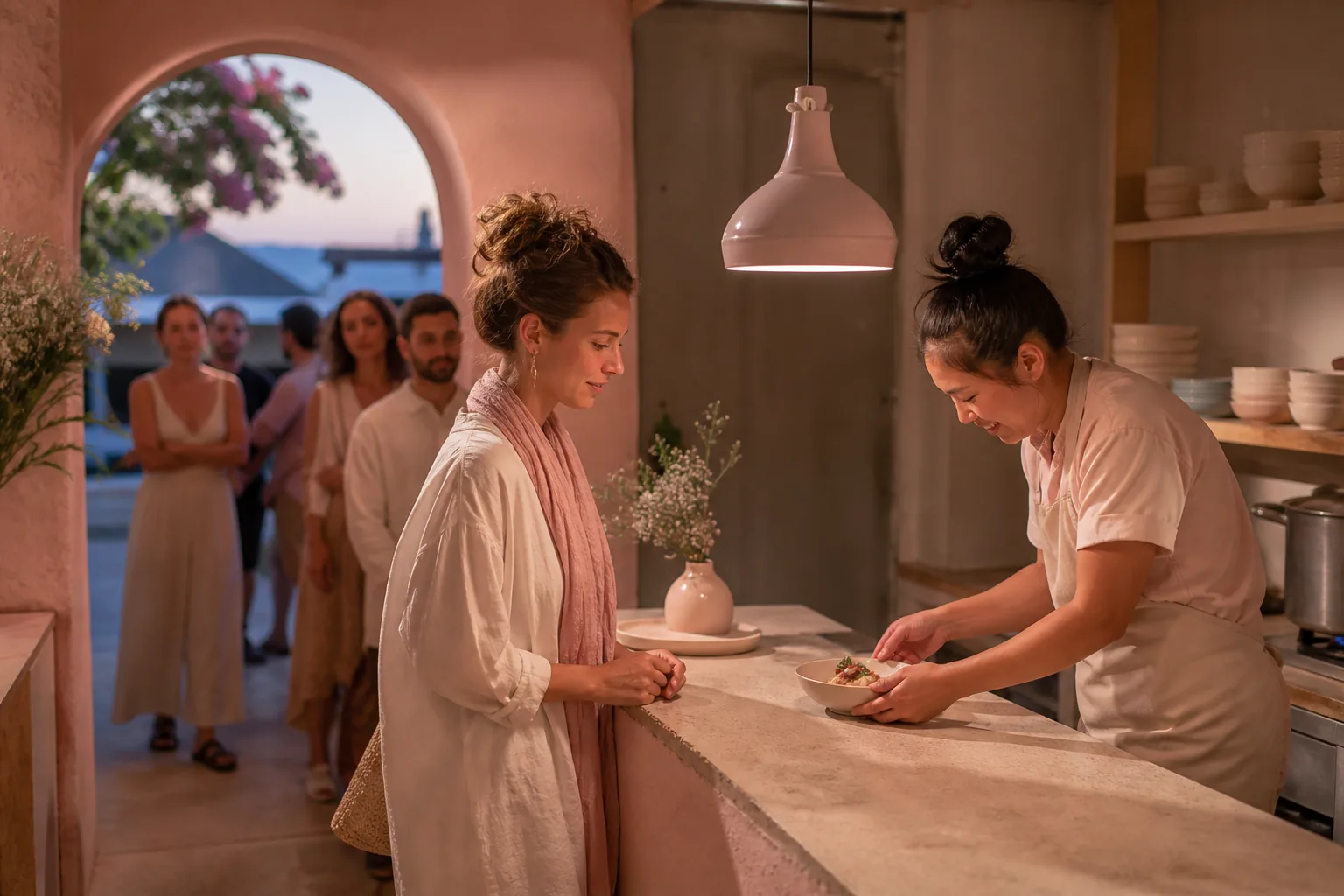
Partnerships
“A partner earns a place in our notes by showing consistent care for guests and neighbors — not by offering exclusive access or staged experiences.”
We collaborate with training groups, market associations, and hospitality educators when their work aligns with careful travel eating. Partnerships are voluntary introductions and shared workshops, not a marketplace of bookings inside our site.
Selection criteria are plain: transparent practices, willingness to discuss dietary limits honestly, and a preference for rooms that feed residents as well as visitors. We decline partners who ask for glowing rankings, guaranteed foot traffic promises, or content that hides real risks around water, allergens, or hours.
When a partnership ends — because a kitchen changes ownership or standards slip — we update our materials. Travelers should never inherit stale endorsements.
A fictional hospitality training circle that runs quiet workshops on communicating allergens across language gaps in small kitchens.
An invented vendor association focused on morning produce logistics and fair stall practices for visitors who shop like neighbors.
A fictional group of small lodgings that share kitchen inventories and guest guidance for simple self-catered breakfasts after late arrivals.
Tell us about your route, dietary needs, and how you want the first meals after arrival to feel. We reply with practical next steps you can check on the ground.
Contact UsPrefer to start with articles? We publish field notes on markets, ordering without a shared language, neighborhood cues, and arrival- day pacing.
Learn Morenyvptz publishes this material for informational and educational purposes. They describe approaches to markets, meal timing, ordering, and dietary communication so travelers can prepare more thoughtfully. The content is intended to introduce our services and shared field observations.
Conditions change between visits: hours shift, kitchens renovate, vendors move stalls, and lodging kitchens vary. Before you travel, confirm details directly with businesses and local contacts. We recommend speaking with relevant specialists — including medical or dietary professionals when you have health-related food limits — before relying on any general guidance.
You remain responsible for decisions about where to eat, what to order, and how to manage water, allergens, and personal comfort. nyvptz does not accept liability for outcomes that result from independent choices made while traveling.