Your First Gastronomic Day After Arrival
A paced sequence for the hours after you land: water first, one market stop, one neighborhood lunch, and an evening plan that skips the nearest open door beside the station.

Arrival hunger makes bad architects
The hours after you land are when many food days fall apart. You are tired, thirsty, and standing beside the brightest doorway near transit. A paced sequence protects you from that default: water first, one market stop, one neighborhood lunch, and an evening plan that does not depend on the nearest open sign.
This is not a rigid itinerary. It is a frame that keeps decision quality from dropping with your blood sugar. You can compress it on a short layover or stretch it when you have a full afternoon.
“The first meal after arrival should reduce chaos, not create a story you have to recover from all week.”
Teach the frame to travel partners in one minute: stabilize, read once, eat once with intention, rest. Shared structure reduces arguments that end in the loudest compromise at the curb.
Step one: water and a pause
Before you hunt flavor, stabilize. Confirm what is safe to drink, refill a bottle, and sit for ten quiet minutes if you can manage it. Heat and transit dehydrate people into impulsive choices. A short pause makes the next steps readable.
- Drink water before caffeine if you have been flying or on long trains.
- Eat a plain backup snack if you are shaky — then continue the plan.
- Set a simple lunch window so you are not still wandering at peak heat.
- Store heavy luggage before the food loop when you can.
Step two: one market loop
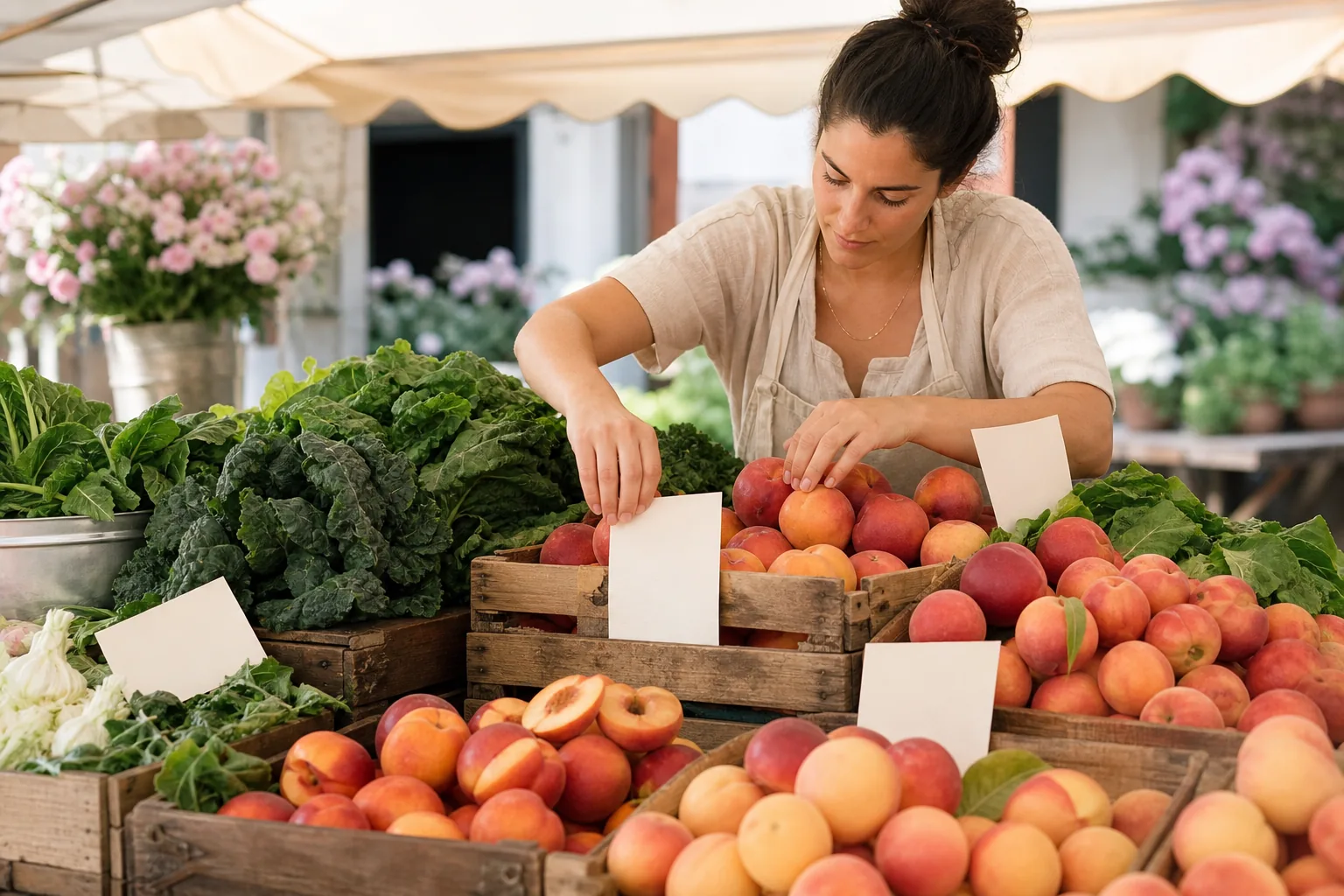
Keep the market visit short. You are reading season and tempo, not stocking a pantry for a month. Note what looks alive, what is turning over, and what lunch might celebrate. Leave before bags and fatigue take over.
- Walk one loop without buying.
- Choose one observation that will guide lunch.
- Buy at most one small item if it helps bridge to the meal.
- Exit toward a quieter street, not back into the loudest corridor.
If the market is closed, shift to a bakery or produce shop with visible turnover. The goal is a quick reading of what is fresh today, not completing a checklist for its own sake.
Step three: neighborhood lunch, not station glow
Transit edges are built for speed and visibility. The first open room is often optimized for people who will not return. Give yourself a geographic buffer of a few quieter blocks when luggage allows.
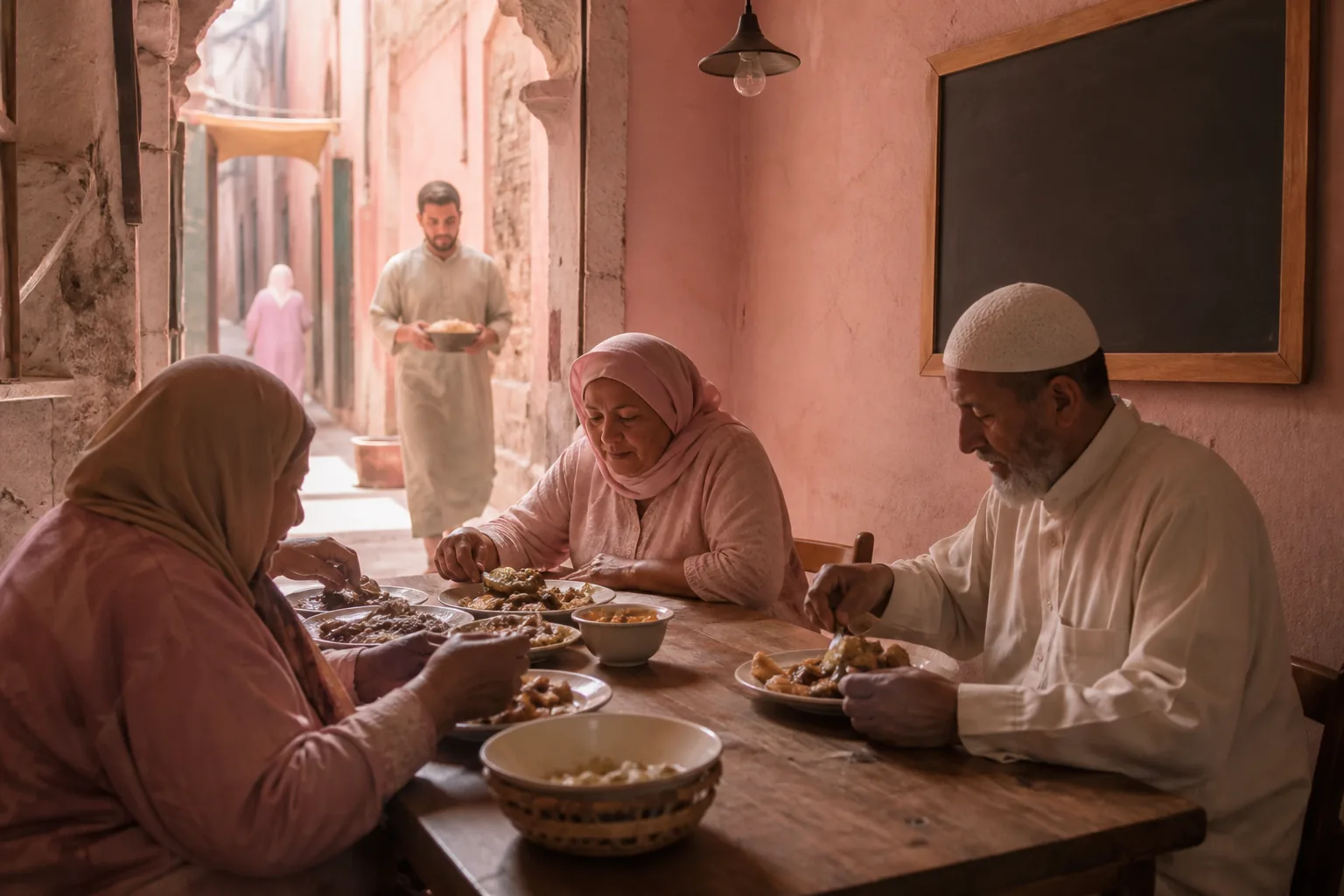
Use facade and sound cues to choose a room that matches your energy and dietary needs. Ask clear questions if limits matter. Finish lunch early enough that you still have daylight for a gentle walk back.
If the first choice fails
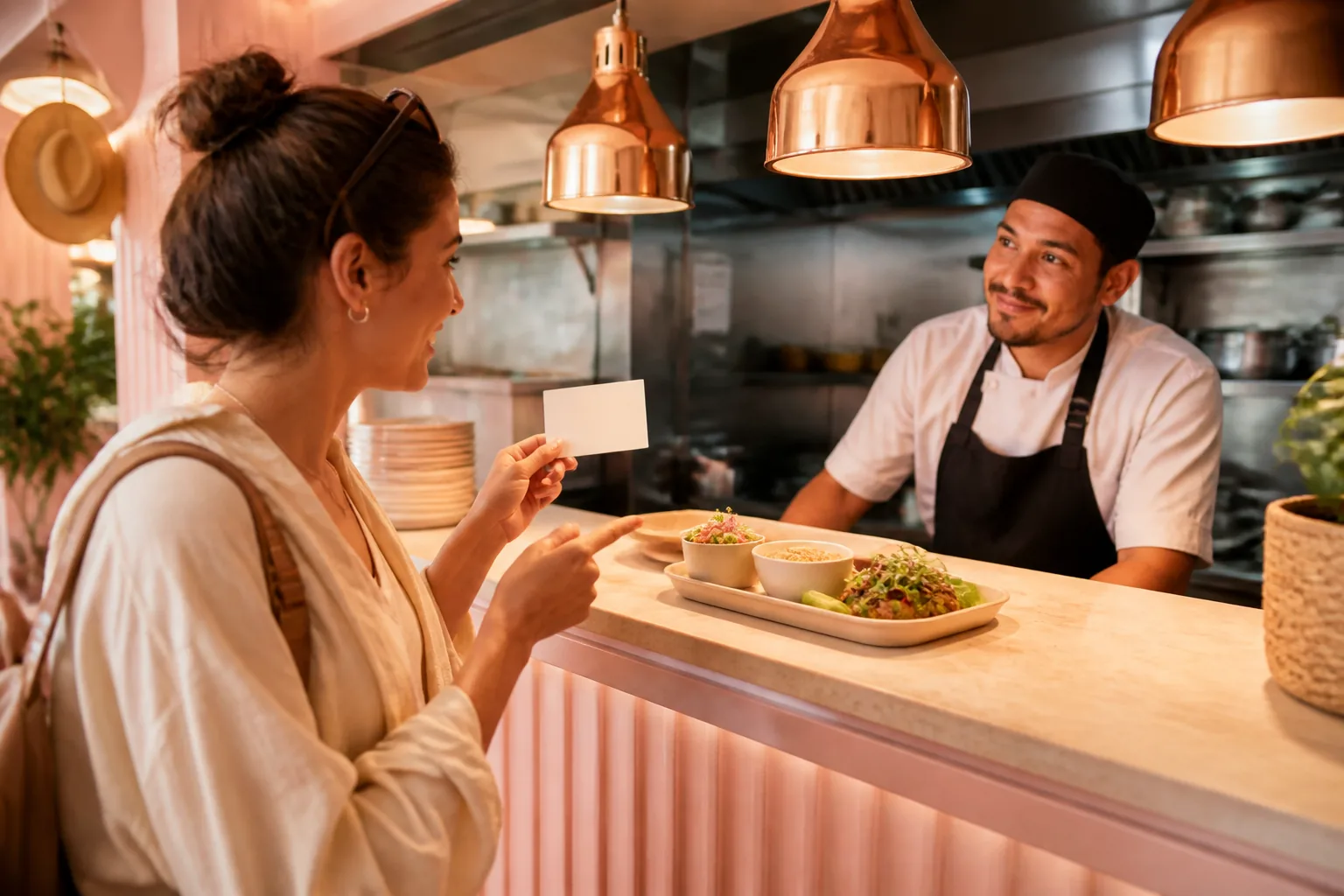
Closed kitchens happen. Long lines happen. Have a second option within a few minutes’ walk. Switching plans is normal. What you avoid is collapsing into the first photo menu out of frustration.
Step four: an evening plan you can keep
Evening after arrival should stay simple: lodging kitchen, a known counter, or an early seating near where you sleep. Save ambitious reservations for a day when your body has caught up. The first night is for recovery as much as for discovery.
If your flight lands late, compress without abandoning the frame. Water, a smaller market or grocery read, a simple nearby meal, sleep. Tomorrow you can expand the loop. Arrival day is foundation work.
Write three lines before sleep: what the market showed, where you ate, and what you would change tomorrow. That tiny review makes day two smarter without turning travel into homework.
If you want a first-day food frame shaped to your route, timing, and dietary limits, request a consultation. Bring arrival hour, walking tolerance, and how adventurous you want the table to feel. We help you build a sequence you can verify on the ground.
A good first gastronomic day is quiet on purpose. It leaves you capable of noticing the next market, the next doorway, and the next honest answer at a counter — which is the whole point of traveling to eat with attention.
Pack the sequence into your notes before you land: bottle, snack, market pin near your first neighborhood, backup lunch street, early evening option. The pin is a suggestion, not a prison. If plans shift, keep the order of needs — water, reading, one solid meal, rest — even when the locations change.
On day two you can chase a longer walk or a harder reservation. Day one earns that freedom by not burning your attention at the first glowing doorway. Travelers who protect the arrival sequence usually eat better for the rest of the stay, because they start oriented instead of recovering from a chaotic first plate.
Keep the standard gentle. A successful first gastronomic day is not the most impressive meal of the trip. It is the meal that leaves you steady enough to keep reading markets and doorways tomorrow. That quieter win compounds for the rest of the journey.