Tourist Street Versus Neighborhood Kitchen
Visible cues that separate rooms built for visitors from rooms that feed regulars. Learn what multilingual boards, photo menus, and side-street quiet usually signal before you take a seat.

Two rooms can share a street and serve different people
Visitor corridors and neighborhood kitchens often sit only minutes apart. One room is built for people who will not return. The other is built for people who might come back after work. You can learn to see the difference before you sit down, and that skill saves more meals than any list of “must try” names.
This is not a moral ranking. Visitor rooms can be fine when you need speed, translation, or a late service window. Neighborhood rooms can be closed when you are hungry, or simply full. The point is recognition: know which kind of room you are entering and what tradeoffs come with it.
“A menu in six languages is information, not a verdict. Pair it with what the room sounds like, who sits there, and how the kitchen moves.”
Signals on the facade and at the door
Start outside. Photo-led boards, staff inviting passersby, and constant turnover of short stays usually mark a visitor room. A short handwritten list, a quiet doorway, and people who look like they came from nearby work or home often point elsewhere.
- Multilingual boards with large photos of plated dishes
- Hosts stationed outside to pull in walkers from the main flow
- Menus that lead with set lunches aimed at people between sights
- Side-street rooms with little exterior theater and steady local chatter
- Chalkboards that list a few dishes and change when ingredients run out
None of these cues work alone. A neighborhood place may post one English line for clarity. A visitor place may hide on a pretty lane. Stack signals: language, photos, soliciting, sound, and who occupies the seats at ordinary meal hours.
Listen before you commit to a table
Sound is underrated. Rooms for regulars often have overlapping conversations that do not pause for every new arrival. Visitor rooms can feel louder in a different way: announcements, quick seating scripts, and the scrape of bags between attractions.
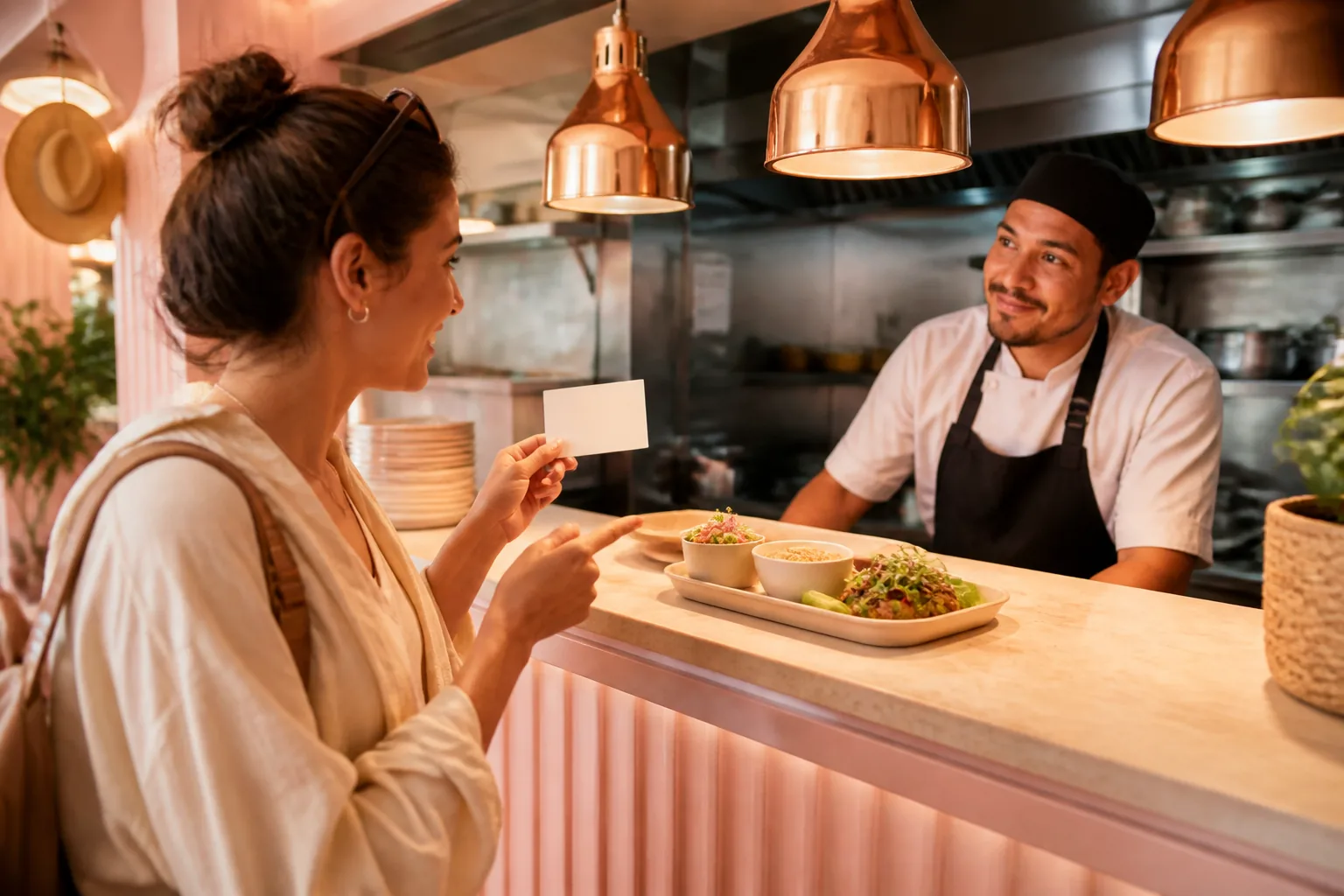
Watch the kitchen pass if you can see it. Steady plating with short waits during local lunch hours is a good sign. Trays that sit under lamps while staff focus on the sidewalk pitch are a warning. You are not judging character — you are reading incentives.
- Stand near the entrance for one minute and notice whether leavers look finished or hurried.
- Note whether newcomers greet staff like regulars or photograph the door first.
- Check whether the menu board matches what you see on tables.
- If unsure, walk one more block before deciding — ten minutes often changes the options.
What neighborhood does not guarantee
A local room can still serve food that is heavy, rushed, or simply not to your taste. Regulars may love a place for habit, comfort, or speed — reasons that may not match your travel day. Recognition prevents surprise; it does not promise delight.
Also, some visitor rooms are run with care and clear ingredient answers. If you have dietary limits, clarity can matter more than atmosphere. Choose the room that can answer your questions safely, even if the street is busy.
When you are exhausted after transit
Fatigue makes the nearest glowing doorway feel inevitable. Build a tiny buffer: water, a market snack, and a five-minute walk off the main flow. That buffer is often the difference between a default tourist plate and a calmer neighborhood lunch.
If the side street is closed or the line is impossible, return to a visitor room without treating it as failure. The skill is choosing with eyes open, not refusing one category forever.
Practice on your next arrival day
Pick one corridor and one parallel street. Compare two rooms using the cues above. Eat where the signals and your needs align. Write three notes afterward: what you saw, what you heard, and whether the plate matched the promise of the facade. That short review trains the eye faster than collecting recommendations.
Over a trip, you will still misread places. Kitchens remodel. Ownership changes. A quiet room becomes popular for a week. Keep verifying on site. The traveler who rechecks the doorway eats with fewer stories that begin with disappointment dressed up as surprise.
If you want help mapping visitor corridors versus quieter lunch options for a specific itinerary, bring your timing and walking limits to a consultation. We work from field habits like these — not from rankings — so you can decide with clearer eyes when you arrive.
Edge cases that confuse even careful travelers
Hotel zones complicate the map. A local-looking room beside major lodging may still be tuned for visitors. Conversely, a place with one translated card near a transit hub may feed shift workers more than tour groups. Always recheck who is seated at the hour you arrive.
Night changes the reading. Some visitor streets calm down and become neighborhood spaces after the day crowds leave. Some quiet daytime rooms turn into nightlife for outsiders. If you eat late, reapply the same cues instead of trusting your lunch impression.
Groups with mixed needs should negotiate before the doorway. If one person needs clear allergen answers and another wants maximum local atmosphere, pick the room that can do both safely, or split the meal plan across the day. Recognition includes recognizing your group’s real constraints.
Keep a simple scorecard in your notes: facade cues, sound cues, kitchen movement, and whether you would return. Patterns appear by the third comparison. That is when the skill starts to feel natural rather than like a checklist you force yourself to run.
Weather and holidays scramble patterns too. A quiet side street can fill with visitors during a festival week, while a famous corridor can empty on a rainy weekday lunch. Re-read the room each time instead of trusting yesterday’s conclusion.
When you get it wrong — and you will — treat the meal as tuition. Ask what cue you overweighted. Too much trust in a chalkboard? Too little attention to who was actually eating? The next doorway becomes easier when you revise the method, not when you chase a perfect streak.
Carry the habit lightly. You are traveling to eat with more clarity, not to police every storefront. Use the cues, choose, enjoy what you can, and keep notes short enough that you will actually write them. That is enough for the skill to travel with you.