Reading Produce Seasons at Morning Markets
How stacked crates, thin trays, and early buyers show what kitchens will cook well that week. A practical walk-through for travelers who want the season — not the souvenir aisle — to set the menu.
Why the market comes before the menu
A morning market is the fastest honest briefing after arrival. It shows what is abundant this week, what vendors protect behind glass, and which trays turn over before lunch. Those signals matter more than a photograph on a board two streets away. When you let produce lead, you stop chasing a dish that was perfect last month and disappointing today.
The goal is not to shop like a local on day one. The goal is to read the aisle well enough to choose a kitchen that cooks with what is actually on the tables. Peak crates, thin trays, and early buyers tell you more about tonight’s plate than any souvenir street claim.
“If the fruit looks tired and the greens look heroic, trust the greens. Season is not a slogan — it is what survives the night and still sells at midmorning.”
Walk with a small bag, not a suitcase mindset. You are collecting clues: which stalls restock twice before noon, which ones rearrange the same pile without selling it, and which handwritten cards change while you watch. That pacing is the season speaking out loud.
Arrive with the cooks, not after the rush
Timing is half the lesson. Late morning can still be useful, but early hours reveal restock habits. Vendors who cook for home kitchens buy early. Visitors who want a pretty photo arrive later. If you can, be present when crates open and knives start work.
Watch who buys in volume. A cook with a rolling cart and a short list is a better compass than a traveler tasting three fruits for free. Follow the volume with your eyes, not your feet — you do not need to copy their route, only notice what they ignore.
- Circle the market once without buying. Note what is piled high and what looks carefully rationed.
- Return to two or three stalls that show real turnover and ask what is best that morning — then listen to how vendors answer.
- Choose one item to taste or take away, and one observation to carry into lunch: “today is a green day,” or “today is a stone fruit day.”
- Leave before you are overloaded. A market walk that ends with too many bags often ends with a rushed, mediocre meal.
If heat builds quickly, shorten the loop. Season reading still works in twenty focused minutes: check citrus quality, smell herbs, and see whether fish trays are iced or merely displayed.
How to read crates, cards, and thin trays
Abundance is not always quality, but repeated restocking usually is a good sign. Thin trays can mean either scarcity or careful selling. Context decides. A thin tray beside a busy scale often means demand. A thin tray with dust and no line often means neglect.
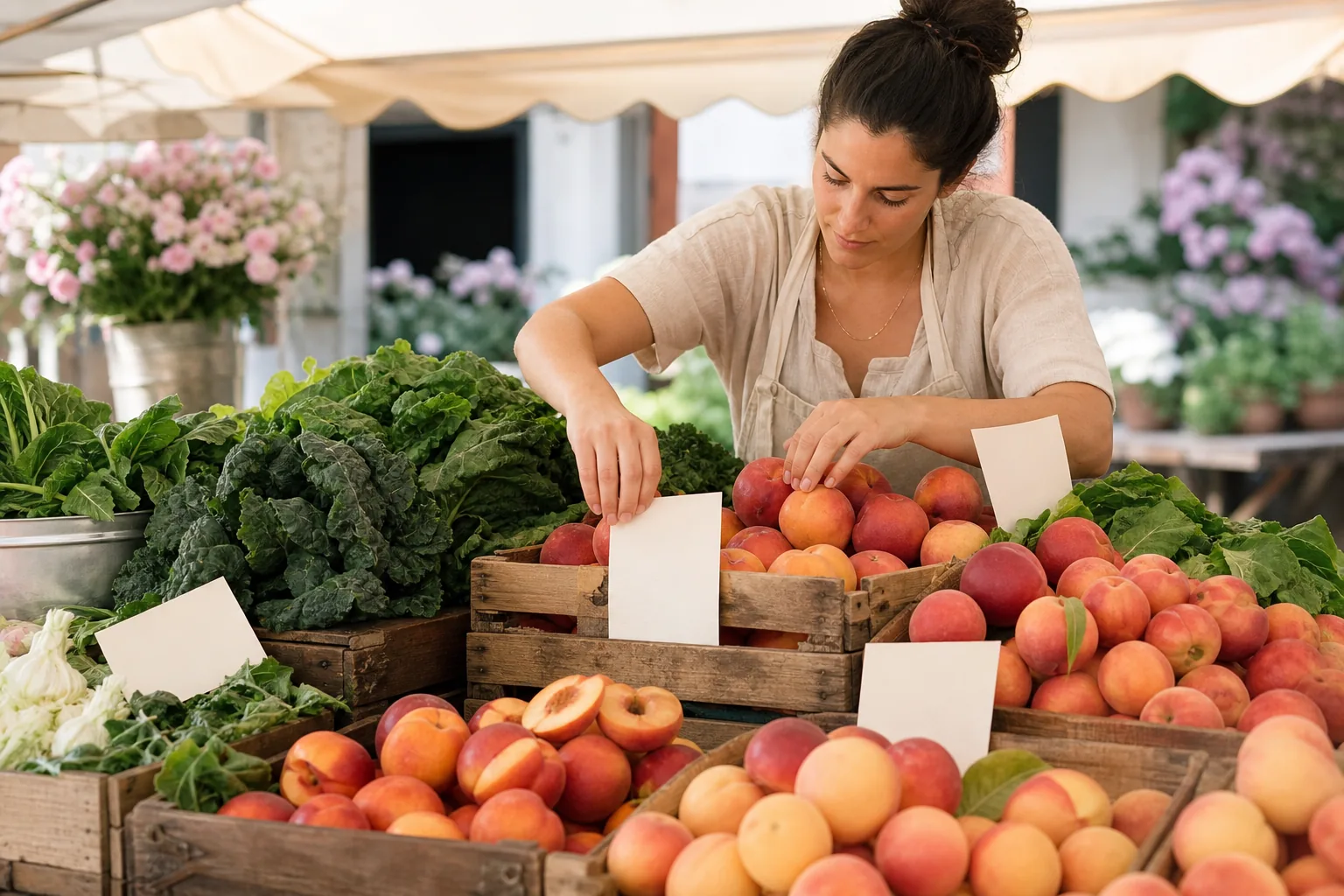
Handwritten price cards that change during the morning are more useful than printed boards that never move. Changing cards show a living market. Static boards can be theater. You do not need to compare numbers across stalls for sport — you need to notice whether the stall is responding to the day.
- Wet greens that still look lifted usually traveled a short path.
- Fruit with mixed ripeness in one crate may be sorted for different uses — ask which ones are for today.
- Herbs tied in small bunches with frequent re-tying suggest real kitchen demand.
- Prepared food trays that empty and refill beat trays that sit unchanged under heat lamps.
- A quiet corner stall can still be excellent if the early cooks stop there first.
Avoid treating the market like a free tasting hall. If sampling is customary, keep it brief and buy something. If it is not customary, do not invent the ritual. Respect keeps the aisle usable for the people who feed households every day.
Translate the aisle into lunch
After the walk, make one decision: what should lunch highlight? If tomatoes are loud and fragrant, look for rooms that put them on the table without hiding them under heavy sauce. If leafy greens dominate, seek broths, salads, or quick-cooked plates rather than deep-fried tourist sets.
Carry a short note in your phone: three ingredients that looked alive, one that looked forced, and the hour when the market felt busiest. That note beats a long list of restaurant names you collected before the trip. It also helps when you ask at a counter, “What are you cooking with today’s market?” — a question that often works even with limited shared language.
When the season fights your craving
Sometimes you want a dish you remember from a previous trip and the market refuses to cooperate. Believe the market. The same name on a menu can mean a different plate when produce is out of phase. Asking for the house version of what is peak today is usually more satisfying than insisting on last year’s memory.
If you cook in lodging, buy less than you think. A small set of peak items — bread, fruit, eggs, one vegetable — covers breakfast and a quiet dinner without waste. Markets punish oversized ambition with soft fruit in a warm bag.
Common mistakes that erase the lesson
The first mistake is treating the market as entertainment between museum stops. You will photograph crates and still eat whatever is glowing beside the station. The second is arriving so hungry that you buy the first fried snack without reading anything. Eat a plain backup first if needed, then walk with a clearer head.
The third mistake is assuming every crowded stall is honest. Crowds can form for novelty as easily as for quality. Pair crowd signals with restock signals. The fourth is ignoring water and shade. A dehydrated traveler reads poorly and chooses badly. Season literacy requires a body that can still pay attention.
Finally, do not turn one morning into a permanent rule for the whole trip. Markets shift across the week. Rain, holidays, and delivery delays rewrite the aisle. Return once more mid-stay if you can. The second walk often corrects the first impression.
A compact field habit you can keep
Make the market your first food appointment in each new place when timing allows. Keep the visit short, specific, and respectful. Leave with one seasonal idea and one practical lunch direction. That habit will not make every meal perfect — nothing does — but it will keep you closer to what kitchens can cook well today.
If you want help turning market observations into a paced food day for a specific route, bring your constraints to a consultation. Share dietary limits, heat tolerance, and how much walking you want. We will help you convert aisle notes into choices you can verify on the ground.
Season reading is a traveler’s craft, not a performance. You will miss things. Vendors will be busy. Some mornings will be dull. Keep going anyway. The skill compounds: after a few markets, you will spot tired fruit faster, hear better answers to simple questions, and sit down with fewer regrets about choosing by picture alone.
Small tools that keep the walk honest
Bring a refillable bottle, a foldable tote, and a willingness to leave empty-handed if nothing looks fresh. Those tools sound dull, and they are the difference between a clear reading and a sticky, overloaded bag that forces a bad lunch decision.
If you travel with companions, assign roles: one person watches restocking, one listens to vendor answers, one tracks shade and water. Comparing notes afterward prevents the group from defaulting to the loudest craving.
When language is limited, point to a crate and ask a short question about readiness for today. Nodding, holding up one finger for “today,” and showing a cooking gesture can be enough. You are not interviewing for a documentary — you are confirming whether the ingredient belongs on today’s plate.
End the visit by choosing a lunch direction within walking range of the market when possible. The closer the kitchen is to the aisle you just read, the more likely the plate reflects what you saw. Long rides between market and meal often erase the lesson.
Keep expectations modest. Some markets are spectacular. Some are thin. Both teach. A thin market tells you to lean on simple cooking, bakery stops, or a carefully chosen counter later. A rich market tempts overbuying. In both cases, the season is still speaking — you only need to listen without forcing a story onto the crates.
On later mornings, test yourself. Can you name three peak items before you check a guide? Can you spot a tray that has not moved? Can you leave without a souvenir spice tin you will never open? Those small checks mean the habit is sticking.
Markets will still surprise you — closed stalls, sudden rain, a holiday emptiness. Treat surprises as data. Write one sentence after each visit. Over a trip, those sentences become a personal map of how food actually moves through the places you pass through.